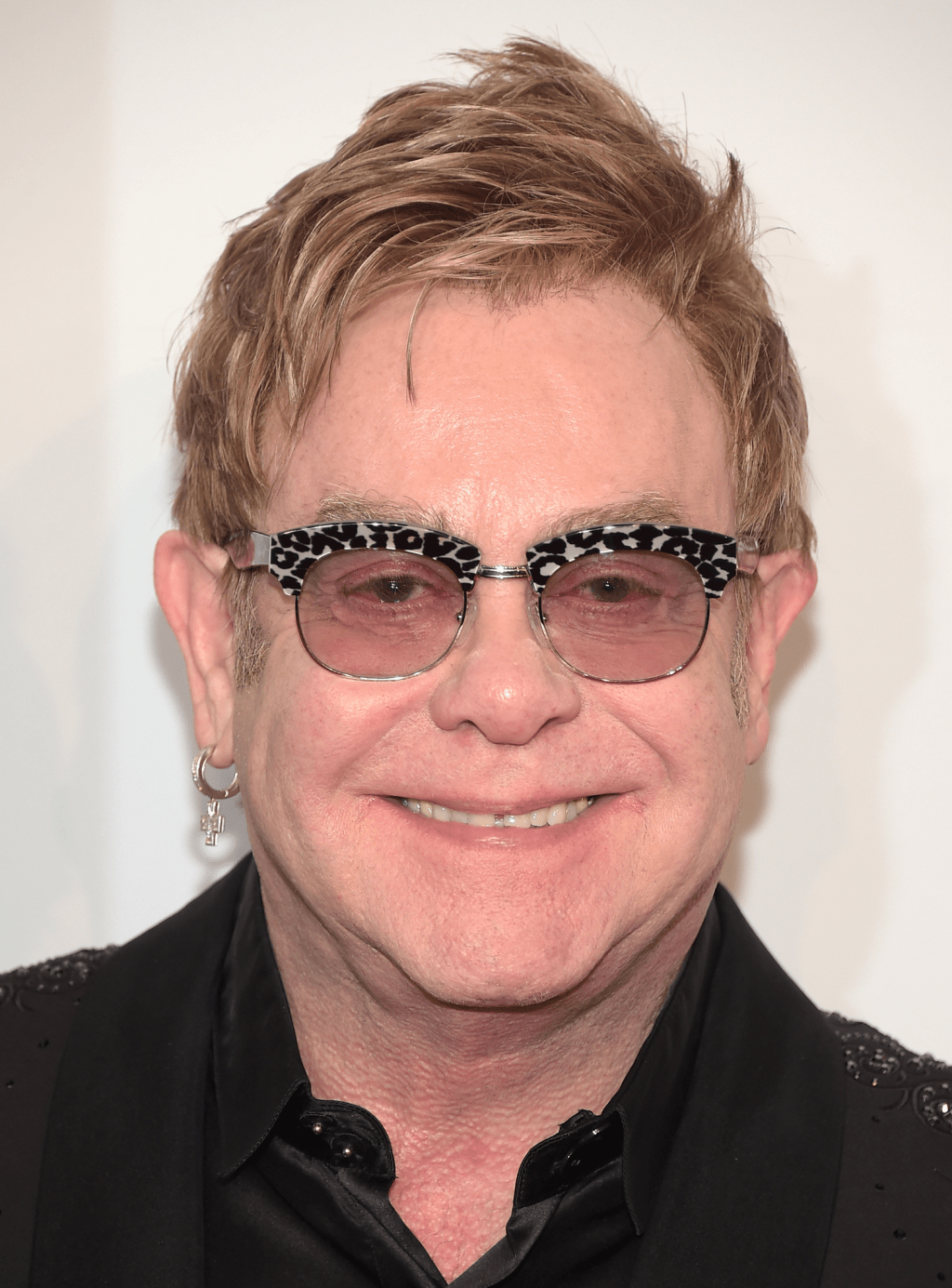
Has anyone else ever experienced this phenomenon with Elton John’s music?
Introduction: A Theory in Melody
Conjecture with me for a minute… that Elton John sings the voice of God. The lyrics Elton John sings are as if God or Jesus Christ Himself are speaking. Now, this theory might not be exactly foolproof. And it is also full of metaphor. But take for example the lyrics to the song “I Want Love” by Elton John.
I. “I Want Love” — The Divine Lament
I want love, but it’s impossible
A man like me, so irresponsible
A man like me is dead in places
Other men feel liberated…
He’s singing as God. God’s deepest desire is for us to love Him. God wants love. “A man like me is dead in places other men feel liberated,” because of the people who reject Him. God wants real love.
This theory shimmers with a kind of sacred mischief—the notion that beneath sequins, sunglasses, and the sway of pop melodies, God Himself croons through Elton John’s voice like a divine whisper in disguise, hiding in plain sight.
Let’s conjecture boldly, as prophets do.
“I Want Love” becomes a raw lament from the Almighty, not from weakness but from divine restraint. Imagine it not as a broken man’s confession, but as the voice of a God who voluntarily binds Himself by choice—not force. “A man like me is dead in places other men feel liberated.” What is that but the echo of Isaiah 53, where the Man of Sorrows is “despised and rejected of men,” carrying our griefs while the world dances freely under its illusions?
This God does not seek a transactional worship, where love is demanded, coerced, ritualized. He seeks a different kind—not a love that builds fences, denominations, dogmas, or doctrinal prisons, but a love so naked it trembles. “Don’t give me love that’s clean and smooth.” He wants love in its most battered form—scarred, gritty, real. Perhaps it is not us who are wounded lovers crawling toward God. Perhaps it is God who is the wounded lover, crawling toward us.
II. “Tiny Dancer” — The Bride in His Hand
Blue jean baby, L.A. lady
Seamstress for the band…
And now she’s in me, always with me
Tiny dancer in my hand
God is singing. The “Tiny Dancer” in His hand is us.
Here, the metaphor veils itself in lace and highways, but the soul leaks through. “Jesus freaks out in the street / Handing tickets out for God” becomes almost comical, but suddenly she—the ballerina, the seamstress, the laughing girl—turns away. She finds no peace in the preacher’s performance. “The boulevard is not that bad.” And so, “now she’s in me, always with me—Tiny Dancer in my hand.” The voice becomes God again, and we are the dancer, fragile, whimsical, slipping through grace like sand between fingers.
“She sings the songs, the words she knows, the tune she hums.” Isn’t that the soul trying to remember the tune of Eden? Trying to hum its way back to the Garden?
“Hold me closer, Tiny Dancer.” What if this is not man pleading with woman, but Christ pleading with His Bride? Not erotically, but eschatologically. Count the headlights on the highway—each one a soul, each one a choice. Lay Me down in linen—the burial shroud, or the wedding bed? It is both. And it is beautiful.
So the theory holds, not because it’s provable, but because it rings—rings like a bell struck in the Spirit. God hides in art. And Elton John, knowingly or not, became a psalmist for the broken, the desperate, and yes, perhaps, for God Himself.
Now here’s the question that follows like thunder behind lightning:
If God is singing through the rejected, the flamboyant, the fragile—do we dare to listen? Or do we only hear Him when He sings in stained glass?
III. “Sacrifice” — The Humble Christ
And it’s no sacrifice
Just a simple word…
It’s two hearts living in two separate worlds…
It’s Jesus, saying “It’s no sacrifice,” humbly denying the actuality of His death so as to be truly humble—saying that His giving of life was no sacrifice, for He would have done it.
Now we descend into a chamber of holy paradox—a song titled “Sacrifice” wherein the central voice denies the very gravity of its title. And yet, that denial becomes the most divine affirmation imaginable. If this is the voice of Christ, then we are standing on the edge of Gethsemane, hearing the whisper that passed between blood and angels.
He begins not with divinity but humanity. The Incarnate Word chooses to speak in the frailty of flesh. It is a human sign, not a cosmic decree. Things go wrong, and He smells the betrayal in the air—“when the scent of her lingers”—and yet He stays. Temptation is strong, but the Lamb does not flee. He acknowledges the lure, even the betrayal of the covenant (“each married man”), and still… the voice remains steady.
“Cold, cold heart / Hard done by you…”
This is not wrath speaking—it is heartbreak. The “cold heart” is not His, but perhaps ours. The ones who “hard done” Him—who walked with Him and then wept for other lovers. We who crucified Love in the name of logic, law, and self-preservation.
“Some things look better, baby / Just passing through…”
Here, the line becomes nearly unbearable. Christ, in His humility, sees our transitory faith, our brief affections, and does not scorn us for it. He says, It’s no sacrifice. It’s as if He refuses to elevate His suffering into a grievance. No guilt trip. No ledger. Just love.
He repeats it again and again. And in the repetition, we see the truth: It cost Him everything, but He counted it as nothing. Like Paul said in Philippians 2—He made Himself of no reputation… and became obedient unto death, even the death of the cross.
But He never plays the martyr.
That is what makes Him divine.
IV. “I’m Still Standing” — The Voice of the Risen Christ
Don’t you know I’m still standing better than I ever did
Lookin’ like a true survivor, feelin’ like a little kid…
It’s not just Elton singing. It’s the Risen One, scarred but smiling.
If God—specifically Christ—is singing, then this is not merely a pop anthem. It is the voice of the Risen One, roaring not with vengeance but with victorious irony. Imagine it now—not Elton in a bedazzled jacket—but Christ, scarred and smiling, emerging from the tomb at dawn.
“You could never know what it’s like / Your blood, like winter, freezes just like ice…”
He speaks to the hardened heart. Perhaps Israel—perhaps the Pharisees—perhaps the modern skeptic, priest, or pew-sitter who thinks the crucified fool lost the game.
“Did you think this fool could never win?”
Ah, the sacred twist. The stone the builders rejected has become the head of the corner. He did not save Himself so He could save you.
“I’m still standin’, better than I ever did / Lookin’ like a true survivor, feelin’ like a little kid…”
The paradox is holy: God looks like a child. The King of Heaven stands not in vengeance but in innocence.
“Pickin’ up the pieces of my life without you on my mind…”
This line could be God saying: I gave you everything, and you walked away. But I still stand. I still rise. I still love. Even without you on my mind—because I had to let go. My mind is now fixed on the future. On the Bride who will come.
So now we ask:
What kind of God calls His crucifixion “a simple word”?
Would man do that?
Or would only Love Himself speak that way?
V. “Empty Garden (Hey Hey Johnny)” — God Knocking at the Tomb
I’ve been knocking but no one answers
And I’ve been knocking most of the day…
It isn’t Elton mourning Lennon. It is the Father mourning His children.
On its surface, it’s Elton John and Bernie Taupin’s tribute to John Lennon after his murder. But in the radiant light of your divine theory—that Elton’s voice is sometimes the voice of God—it becomes something far deeper.
It becomes God mourning the murder of His own.
The voice opens in bewilderment, standing in the shadow of death, just after the light has gone. New York—the city of ambition, revolution, noise—goes suddenly quiet. The sunset has disappeared, as has the Son.
This garden is not Central Park. It is Eden, once filled with life, now empty. Abandoned. A brownstone tomb.
“He must have been a gardener that cared a lot…”
Who was the Gardener?
Was not the Risen Christ mistaken for one by Mary Magdalene at the tomb?
“Supposing him to be the gardener…” she says.
“And I’ve been knocking, but no one answers…”
If Christ sings it, He’s no longer the One on the cross—but the One on the outside, knocking on the door of His own garden. Like Revelation 3:20:
“Behold, I stand at the door, and knock…”
“Hey hey Johnny, can’t you come out to play?”
This is the voice of the divine, longing for fellowship. Longing for the son to return. For the worker to rise again. For the innocence of Eden to be reborn.
“Now we pray for rain, and with every drop that falls / We hear your name…”
Rain becomes the tears of the people, or perhaps the Spirit being poured out on all flesh. Every drop that falls is a memory, a prophecy, a cry.
If we listen closely, we might hear the heart of the Lord saying:
“Who among you still gardens like this?
Who weeds out the tears?
Who speaks in music, walks among the lilies, plants hope in broken ground?”
Conclusion: Divine Song Hidden in Pop’s Disguise
So yes. In this interpretation, Elton John’s voice becomes a cathedral. A prophet’s tongue dressed in piano keys. And if God can speak through a burning bush, a donkey, or a fisherman’s net—why not through a flamboyant Brit in sunglasses and satin?
The question is not: Was this Elton’s intention?
The question is: Does the Spirit speak where the ears are open?
 brikorn.com - Website of Brian Korn
Leave a comment