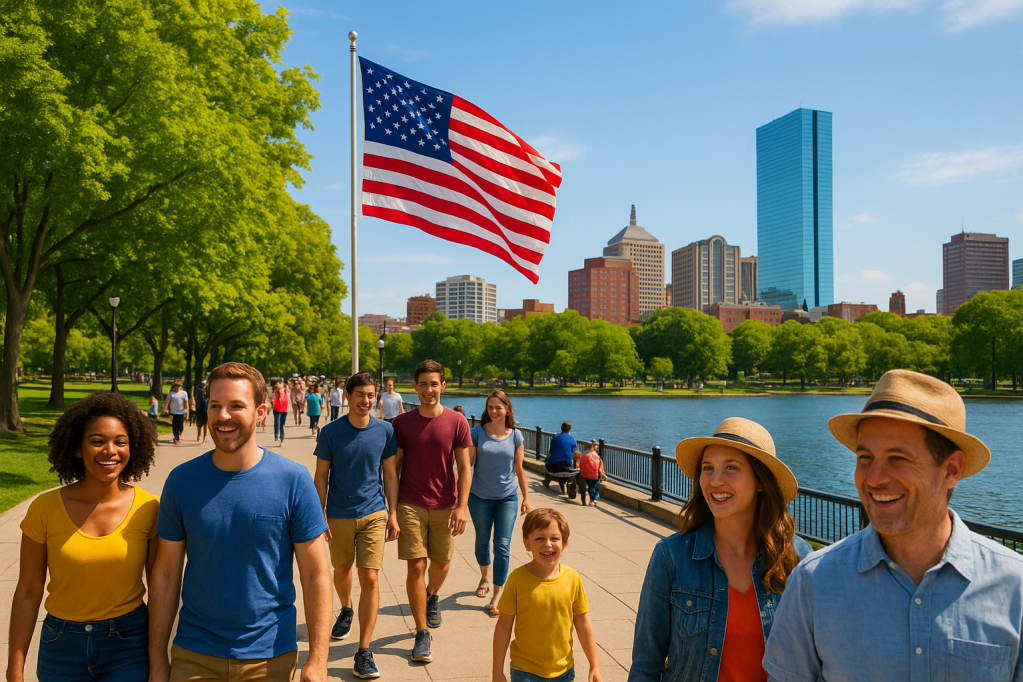
Imagine, for a moment, a city whose streets are swept clean not by mandate but by devotion. Picture a place where fire trucks stand ready because your neighbor cares enough to support them, not because some distant bureaucracy threatens her with penalties. Envision a community that does not cower before the specter of the tax collector but rises in the shared pride of voluntary stewardship. This is no idle fantasy; it is the seed of a model that could, in time, transform how we think about governance, responsibility, and belonging itself.
The idea is radical precisely because it is ancient. For thousands of years, men and women have given freely to causes they believe in—churches, hospitals, schools, and relief societies. These institutions have endured war, famine, and cultural upheaval, all without compulsory taxation. What if a city chose to pattern itself after this venerable tradition? What if, on a designated day, a city declared that it would no longer demand taxes but would instead sustain itself on offerings—generous gifts given in gratitude for the blessings of safety, order, and fellowship?
In this city, which we might call Libertas, no resident would be compelled to surrender even a single dollar. All contributions would be made voluntarily, in the spirit of sustaining the common good. Every city worker—from the mayor to the police officer to the clerk behind the counter—would be a volunteer. Instead of receiving fixed salaries, they would be granted stipends, modest acknowledgments of their time and dedication, funded solely by offerings from the citizens. Far from being a burden, such giving would be a point of honor, a visible token of faith in the place one calls home.
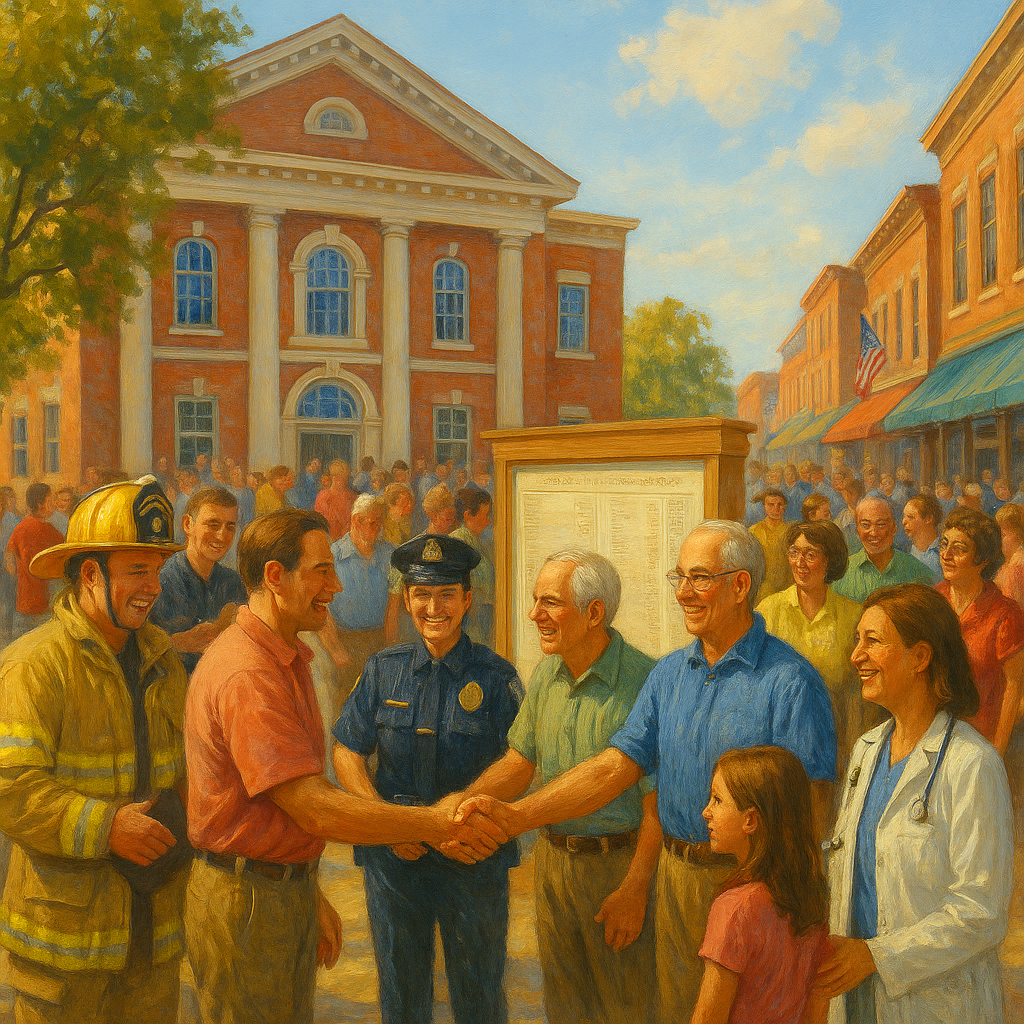
Critics will rush to pronounce this vision impractical, arguing that without taxes, the revenue would evaporate, and the firehouses would stand empty. But this critique ignores a deeper truth: that people often give far more willingly—and abundantly—when they are not coerced. When giving is an act of gratitude rather than submission, it nourishes the soul of the giver and elevates the community as a whole. In this model, transparency becomes a pillar. Every donation would be published, every expenditure accounted for, every citizen empowered to see precisely how their contributions were used. Such clarity would ignite trust, the very fuel of civic prosperity.
Some will say that human nature is too selfish for such an experiment. Yet history abounds with examples of extraordinary generosity when the cause is clear and the need is real. From the church tithes that built cathedrals to the volunteer militias that secured American independence, free people have again and again chosen sacrifice over indifference. Why should it be unthinkable that citizens, seeing their neighbors serve without pay, would find themselves moved to support the shared enterprise? Indeed, it is likely that contributions would not merely replace but surpass the revenue that taxes once extracted by threat of force.

Consider the moral transformation such a city would effect. No longer would a family’s earnings be skimmed away in opaque increments, disappearing into vast bureaucracies. Instead, each household would stand in honest relationship to its civic life. Giving would be visible and celebrated. Generosity would become as much a part of local identity as the flag fluttering over city hall. The bitterness that always clings to coerced tribute would dissipate, replaced by the quiet joy of knowing that your gifts sustain your neighbors—and that their gifts sustain you.
There are three questions that inevitably arise when this vision is shared, and they deserve answers worthy of their gravity.
First: Is it possible that the architecture of compulsion has simply hidden how much people would give if given the chance to own their civic destiny? Yes, it is not merely possible but probable. For when people see the human faces behind the services—when the police officer is their friend, when the librarian is their sister—they no longer view contributions as a loss but as an investment in something deeply personal. The cold abstraction of taxation becomes a warm bond of mutual care.
Second: Could a city run entirely by volunteers and offerings become the beacon that reveals the lie behind the notion that only taxation sustains civilization? Indeed, such a city would shine like a lighthouse through the gloom of cynicism. Its success would expose the prevailing dogma—that citizens cannot be trusted with their own prosperity—as a hollow superstition. It would prove that a free people, inspired by pride and guided by conscience, can support their community more nobly than any compulsion ever could.
Third: Might such a city inspire thousands of others to follow, like the first colony whose example fertilizes a continent? One need only look at how a single town hall, a single congregation, or a single reform movement has sparked revolutions of conscience across nations. If Libertas could stand as a testament that faith in one’s neighbors is more powerful than fear of the taxman, it would become the progenitor of a thousand experiments in freedom, each one reclaiming a little more of the dignity and fellowship that modern governance has tried to smother.
This is not a plea for naivety but an invitation to hope. The question before us is whether we are willing to believe that the bonds between neighbors can be stronger than the apparatus of force. If you have ever longed to live in a place where giving is a joy, where service is an honor, and where no hand is compelled, then Libertas is not merely a dream. It is the outline of a future waiting to be embraced.
One day, such a city may rise—and when it does, let history record that it was not fear that built it, but faith.
 brikorn.com - Website of Brian Korn
Leave a comment